

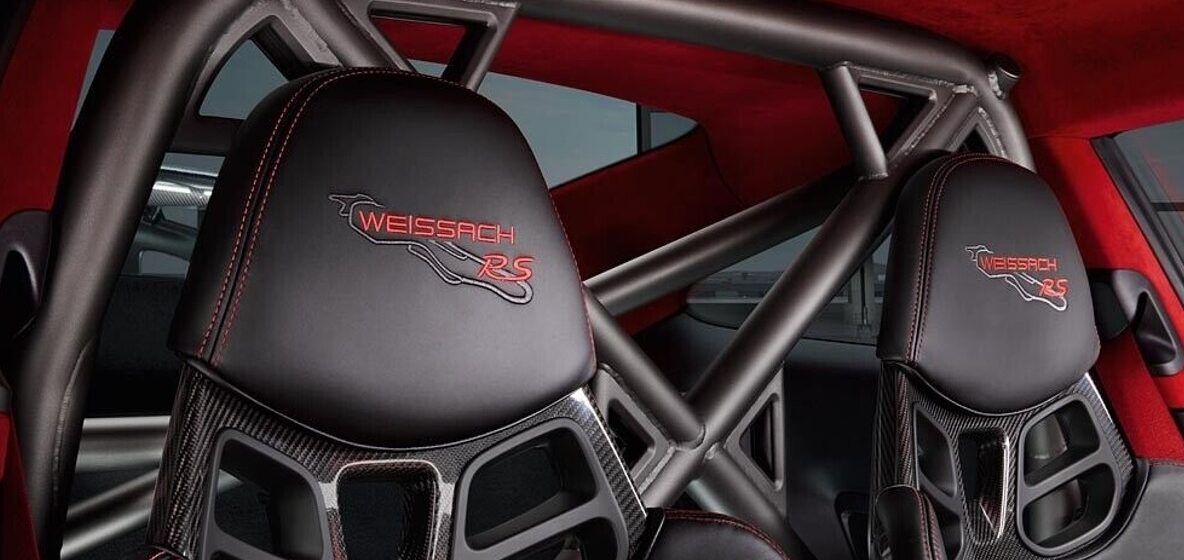
To automotive enthusiasts, a solid chassis framed by cross-members is indispensable. The chassis layout delivers body stiffness and sharp handling precision.
Role of cross-members and struts
These components offer the simplest way to stiffen a vehicle’s structure. By installing them, body panels become cross-linked, tying together the front and rear suspension mounting points. Strut braces are precision-made tubes whose dimensions, materials, and performance specs are tailored to each car model, with the quality of their welds and joints taking top priority.
Aftermarket tuners often deploy these braces to compensate for designers’ oversights. A pliable chassis results in lackluster handling, and any small cracks or tears in the metal can accelerate corrosion and weaken the frame. Furthermore, a loose body shell compromises passive safety and diminishes both stability and steering response. In real-world driving conditions, adding strut braces is a practical and effective upgrade.

Notably, the gap between strut tower mounts on cars of the same make can vary because of manufacturing tolerances. Imported vehicles often keep this offset to just a few millimeters, whereas local models may drift as much as 10 mm. To accommodate these differences, both fixed and adjustable strut braces are offered.
Welded braces belong to the non-removable category, since they’re fused directly into the chassis. This permanent attachment delivers exceptional stiffness, but it also means there’s no on-the-road method to retension them. That’s why meticulous weld quality control is vital.
Another reinforcement approach uses underbody subframe braces, installed longitudinally and transversely.
Transverse beams link suspension mounting points, while longitudinal members span front to rear. Together, they lock down the chassis and prevent unwanted body flex.
These spreader beams are made from materials like carbon or stainless steel, titanium, and aluminum. Their cross-sections can be round, oval, square, or rectangular.
Beyond structural benefits, they double as visual enhancements – you can paint them any color or opt for a chrome finish. Before adding any brace, it’s important to factor in how extra rigidity changes the way the body deforms under stress. Balancing increased stiffness against the chassis’s natural flex characteristics helps avoid creating new stress points.

Roll Cage
The roll cage is engineered to boost chassis rigidity and comes in several configurations. The most basic form is a pair of hoops over the driver and passenger, while the full spatial cage links front shock towers, rear suspension mounts, rocker panels, sidewalls, and the main safety hoop into a single, three-dimensional framework.
These cages are offered as bolt-in or permanent welded assemblies. Bolt-in cages bolt to the B-pillars and floor, allowing removal when needed. Welded cages are seamless structures fused to the car’s load-bearing points and are favored in serious tuning projects. Competition and racing cages demand exacting standards for dimensions, tubing material, and fitting precision.
Installing a full roll cage typically occupies about half the cabin, since the rear seats serve as attachment points for the tubing. The dense web of pipes also compromises rearward sightlines and commonly provides mounting for four- or five-point harnesses.
Tubing is generally made from high-strength steel or aluminum alloy, and a complete safety cage usually weighs between 25 and 40 kilograms. Bright paint finishes are popular, and critical tube intersections are often covered with foam padding for protection. Cars without a certified roll cage are ineligible for most motorsport competitions.